


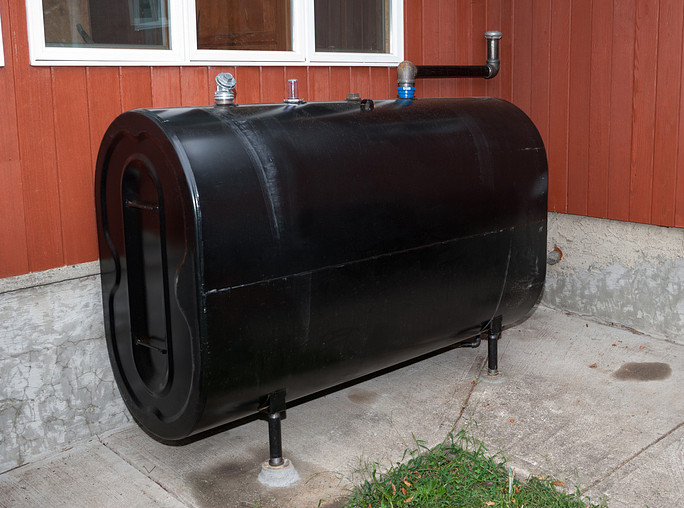
 The beauty of having a heating oil tank on your property here on Cape Cod is that it can last a homeowner for 30 years – sometimes even more! Depending on how long you live in your home, this could mean that you may never need to replace your tank at all.
While heating oil tanks are intentionally designed to be durable and long lasting, the key to their longevity is regular inspections that are conducted by a professional.
Simply put, a well-maintained and cared for heating oil tank will most likely last longer than a heating oil tank that isn’t maintained and cared for.
Additionally, regular inspections are the best way to catch any small issues before they turn into large and potentially expensive issues that could leave you without heat for a period of time.
Inspections on heating oil tanks are especially important since most of the deterioration they experience occurs inside the tank and can, therefore, go easily unnoticed.
That is why it is important for homeowners to be aware of the signs of possible corrosion. These signs include:
If you notice any of the above signs it may be time to replace and upgrade your heating oil tank, which Cape Cod Oil & Propane can happily help you with. We can install a new, top-of-the-line tank on your property, transfer any fuel that is still in your old tank to your new tank and then remove your old tank for you. All of our tanks and installations meet both the state and local safety requirements.
It is best practice to not wait until winter to replace your heating oil tank. Spring is a much better time to handle this. Since heating equipment is not in such high demand during this season you will find that it is cheaper. It will also be easier and less complicated to schedule a delivery since the team here at Cape Cod Oil & Propane will be more accessible.
Not sure if your tank needs to be replaced? We can help you figure that out. A member of our technical team can come to your home and conduct an assessment.
Families here on Cape Cod can count on Cape Cod Oil & Propane for the heating oil tank servicing, repairing and replacing that their homes need.
We also make heating oil deliveries all throughout the Cape as well. Our customers can choose our free automatic delivery option or stick with will-call service.
Contact Cape Cod Oil & Propane today and let us know how we can help with your heating oil needs.
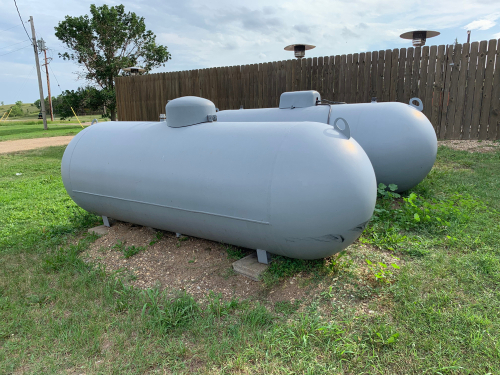 If you are thinking about adding a propane tank to your property here on Cape Cod there are a couple decisions that you are going to have to make. Whether you have lived in your home for years and are switching over to propane or you are building a new home from the ground up and making propane your main fuel of choice, you will have to decide what size propane tank to get.
This is actually a very important call. If you end up with a tank that is too small you are going to need frequent refills, which typically equates to unncessary expenses. A tank that is too large can end up being a waste of space, energy and resources. On top of all that, you need a tank with enough capacity and bandwidth in order for your propane-powered appliances and equipment to work efficiently.
So let’s take a look at exactly what you need to know to find the size propane tank that will work best for you and your home.
There are multiple elements to think about when you are trying to select the right tank size. This includes:
It is important to remember that tank size and take capacity are two different things.
Cape Cod Oil & Propane typically installs:
A propane tank is considered full at the 80% point. The remaining 20% of space is left for the fuel to expand as it temperatures rise. This means that a 120-gallon tank can safely hold 96 gallons of fuel and so on.
Cape Cod Oil & Propane can help homeowners here on the Cape get set up with the propane storage they need.
Contact us today to learn more about our propane tank installations, maintenance and fuel deliveries.
 If the time has to come for you to replace the heating oil-powered furnace or boiler in your home, you may find yourself wondering if changing over to an entirely new system is a better and smarter decision than continuing to use a system that relies on heating oil. With all the different heating options that are out there, choosing an option that provides the heat you need without costing an arm and a leg is essential to helping you stay warm and comfortable all winter long.
The good news is that you can likely accomplish this with today’s heating oil. The fuel is far from a thing of the past and it is certainly not out of style. So even though it may be time for you to replace your old heating system with a modern version you can still use the fuel that you have become accustomed to over the years.
The heating oil that is available to purchase today is cleaner and greener than it has ever been. The same goes for the oil heating systems that are made today. These are also more efficient compared to older versions.
Newer versions of heating systems that use heating oil have taken advantage of modern day technology to maximize comfort while decreasing fuel expenses. For example, a lot of modern heating oil equipment is made with advanced controls that provide the luxury of precise fuel usage, meaning they only utilize the necessary amount of fuel to provide heat to a home. This keeps your home warm and comfortable and also optimizes energy consumption.
The improvements and advances that have been made to oil-powered heating equipment help it last longer and use less fuel and unnecessary resources. Today’s systems are smaller and more compact than older versions, are quieter, produce more even and consistent heating and have higher AFUE (Annual Fuel Utilization Efficiency) ratings. The boilers and furnaces that are made today actually extract more heat from every gallon of fuel, which helps make them extremely efficient.
Oil heat burns hotter than other home heating fuels do. In fact, it produces up to 40% more heat per gallon than propane does. Additionally, heating systems that are powered with heating oil are able to produce a consistent and powerful supply of heat to a home.
Today’s heating oil has a considerably lower sulfur content than older heating oil did, which helps reduce harmful emissions. Not only does this help make a heating system operate more efficiently, but it also helps prevent breakdowns and can add years onto a heating system.
The heating oil that we sell here at Cape Cod Oil & Propane incorporates biofuel that is made from recycled ingredients such as seed oils, soybean oils, animal fats, algae and cooking grease. This helps further cut down on carbon emissions.
Cape Cod Oil & Propane can handle all of your heating oil delivery, storage and system needs.
Contact us today to learn more about the services we offer all throughout Cape Cod.
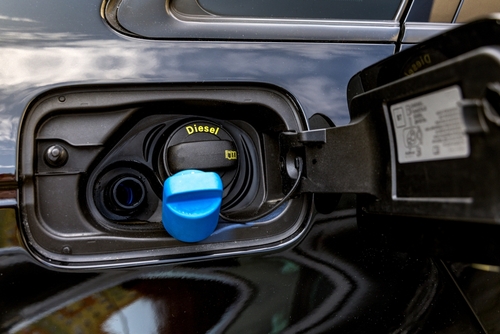 If you are running a business that relies on trucks, buses, forklifts, cranes, generators, tractors or bulldozers you have the choice of fueling the engines that belong to your equipment with diesel fuel or standard gasoline.
Any business owner knows how important it is for these vehicles and this equipment to be durable and last you a good amount of time. After all, not having durable and trustworthy equipment makes it hard to get your work done, which we all know is not good for your bottom line or your company’s productivity levels.
So what fuel is going to give your vehicles and machinery the most long-term durability? Let’s figure out the answer to this question together.
To put it plain and simply, an engine that is powered with diesel fuel is more durable than an engine that is powered with standard gasoline. You will also find that a diesel fuel powered engine lasts longer than a gasoline-powered engine.
All in all, this makes diesel fuel powered vehicles and equipment more reliable, which can only have a positive impact on your business.
There are two main types of diesel fuel and we offer both here at Cape Cod Oil & Propane.
On-road diesel fuel is used to fuel trucks, freighters, school buses and shuttle buses. In other words, vehicles that drive on an open road. It is commonly used by landscapers, moving companies and excavation companies.
Off-road diesel fuel (otherwise known as red diesel fuel) is reserved for vehicles and machinery that operate off of roads. It is also commonly used on construction sites and farms. In fact, it cannot and should not be used in standard commercial vehicles. Alternatively, off-road diesel fuel can be used for cranes, bobcats, generators, backhoes, bulldozers, tractors, forklifts and harvesters.
We have already covered the fact that diesel fuel offers durability and longevity.
On top of that, diesel fuel is now cleaner, greener and better for the environment than ever before.
It also gives an engine more power and makes them more equipped to tow heavy objects and materials.
Compared to a gasoline-fueled vehicle, a diesel-fueled vehicle is more efficient. Actually, certain vehicles that use diesel fuel can get 30% more miles than a gasoline-powered vehicle.
No matter what type of engine you are powering here on Cape Cod, Cape Cod Oil & Propane can get you the on-road and off-road diesel fuel you need. We serve all sorts of commercial customers throughout the Upper, Lower, and Outer Cape, including moving companies, freighters, school buses, shuttle bus companies, excavation companies and landscapers.
Cape Cod Oil & Propane sells diesel fuel at Head of the Meadow Shell Station on Route 6 in North Truro. Alternatively, we can deliver premium diesel fuel directly to your worksite.
Contact Cape Cod Oil & Propane today to partner with us on your diesel fuel needs.
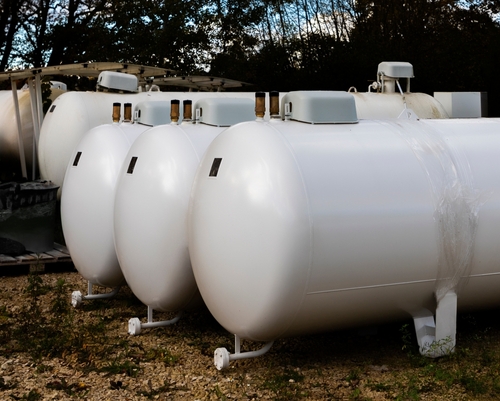 Do not assume that a 500-gallon propane tank holds 500 gallons of fuel.
The propane that goes into a tank is in liquid form. This means that it will expand as it warms up. Therefore, propane tanks should only be filled to 80% capacity for safety purposes. A 500-gallon propane tank is considered full when it has 400 gallons of fuel in it.
So exactly how long will this 500-gallon tank of propane actually last an average homeowner? Answering this question is important to help prevent a fuel run-out, which is something no homeowner here on Cape Cod or anywhere wants to deal with. Therefore, let’s get to the bottom of answering this question together!
There are multiple factors that influence exactly how much propane a home will go through a day, a week, a month and a year. This includes:
Exact propane usage varies from household to household. A 500-gallon propane tank can last a homeowner anywhere from a little over a month to about 14 months.
It is pretty safe to assume that a 2,220 square foot home usually goes through about 700 to 1,000 gallons of fuel a year. However, the exact amount of fuel that a home will use annually is impacted by all the elements listed above.
Here is a snapshot of how much propane a standard household appliance will typically use:
You can use the above breakdown to estimate how long your 500-gallon propane tank will last you and your home.
Homeowners here on Cape Cod can count on Cape Cod Oil & Propane to be their full-service propane delivery and services provider. We offer propane deliveries as well as propane tank installations, repairs and maintenance.
Businesses here on the Cape can count on us for bulk propane deliveries too.
Contact Cape Cod Oil & Propane today to learn more about the propane delivery and services we offer throughout Cape Cod.

To avoid delivery delays, please note the following.
We appreciate your business and patience as we work to take care of our customers.
 If you have ever found yourself driving around and have noticed that the price of standard gasoline seems to vary from gas station to gas station your eyes aren’t deceiving you – this can and does happen. It is also no secret that the price of gas can change from month to month or even week to week. The same thing happens with the price of heating oil.
If you are curious as to why, keep on reading. Cape Cod Oil & Propane breaks it all down for you below.
Cape Cod Oil & Propane can’t control things like politics and the price of crude oil. However, we do our very best to help our loyal customers out with their home heating oil costs.
Not only do we work hard to get our customers the most competitive fuel rates, but we also offer a no-fee Monthly Budget Plan to stabilize your heating oil costs and help lower your winter utility bills. This plan lets you spread your oil costs evenly over the course of 12 months.
Homeowners here on Cape Cod who are in need of a reliable heating oil provider should contact Cape Cod Oil & Propane today to learn more about the services we provide throughout the area.
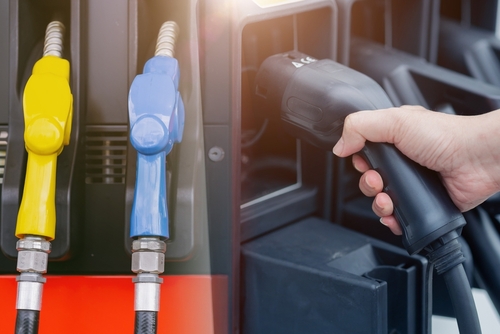 If you are considering fueling a vehicle with diesel fuel there are all sorts of factors to consider. You want to think about how diesel fuel is going to help your vehicle in terms of durability and efficiency as well as the types of benefits switching over could offer. Costs typically play a role in making this kind of decision as well. So let’s go ahead and break all of this down together so that you have the information you need to feel confident about switching over to diesel fuel.
For many of us, financials play an influential role in the decisions we make. Here is a look at how the cost of diesel fuel compares to the cost of electric vehicles:
With all of that said, the price of diesel fuel does often fluctuate for all sorts of reasons, including local taxes, how in demand and accessible the fuel is, transportation costs and storage costs.
Engines that are powered by diesel fuel are known to be more durable than engines powered by traditional gasoline. They also usually last longer than gas-powered engines do.
Additionally, diesel fuel gives an engine a significant amount of power and increases how efficient a vehicle is. In fact, certain vehicles that use diesel fuel can get up to 30% more miles than if they were to use gasoline.
On top of that, modern advances have made the diesel fuel that is made today cleaner, greener and more environmentally friendly than it has ever been.
Cape Cod Oil & Propane can deliver either on-road or off-road diesel fuel to your Cape Cod based business or municipality. However, we know that we are not the only company who is able to do so and that is why we work tirelessly to stand out from our competition. We strive to provide our customers with the best full-service fueling operation on the Cape. Cape Cod Oil & Propane has decades of experience serving local businesses within the community and we have over 100,000 gallons of fuel between our storage facilities in Provincetown, Eastham and Harwich.
Not only can we deliver diesel fuel directly to your worksite, but we also rent top-quality skid tanks to our commercial customers so that they have a secure and safe way to store their fuel.
Contact Cape Cod Oil & Propane today to learn more about the diesel fuel services we provide throughout the Cape.
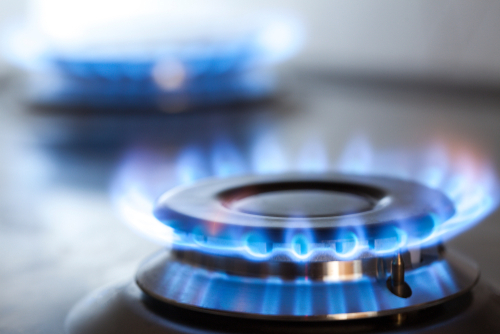 For those homeowners and business owners who make propane their fuel of choice, finding a reliable and dependable fuel provider is important. If you are out here on Cape Cod, you can count on Cape Cod Oil & Propane to be this provider.
Cape Cod Oil & Propane has been providing fuel to homes throughout the Cape since 1974. We have a reputation for exceptional service when it comes to propane deliveries. On top of that, our team can handle propane tank installations, repairs and maintenance.
Now that you know where to go when you need propane here on the Cape, let’s get into some details about the actual fuel.
Propane, which is a byproduct of natural gas processing and crude oil refining, can actually be both a liquid and a gas (although not at the same time).
Propane is a gas, which is why it is sometimes referred to as liquid petroleum gas. However, it can be compressed and stored in a liquid form for it to go into a propane tank.
In its natural state and form, propane has no odor. As propane is being made, a scent is added to it so that a leak is easy to detect. In the event of a leak, propane will smell like decaying meat or rotten eggs. If you ever suspect a propane leak you should evacuate the area immediately and contact emergency services as well as your propane provider when you reach a safe distance from the site of the leak.
Propane can power pretty much any appliance or piece of equipment that natural gas can power. This includes grills, cooking ranges, forklifts, scissor lifts, welding equipment, pool heaters, space heaters, generators and non-wood burning fire pits. Propane can also power home heating systems and heat the water that is used inside a home.
Another good fact to know about propane is that it is incredibly efficient – this is one of the many benefits the fuel provides to its customers.
How efficient are we talking? Just take a look:
Cape Cod Oil & Propane can deliver the propane your home here on Cape Cod needs. We also offer bulk propane deliveries for local commercial customers.
In addition to propane tank installations, our team can also install propane generators, pool heaters, fire pits and fireplace inserts.
Contact Cape Cod Oil & Propane today to hear more about the propane deliveries and services we offer throughout the Cape.
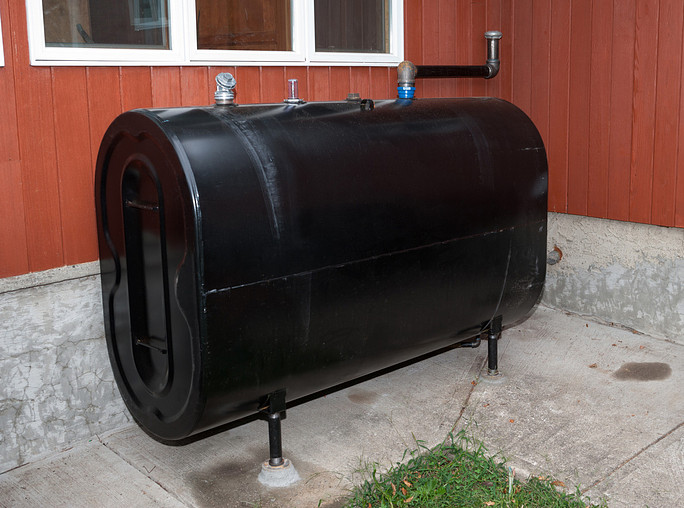 If your Cape Cod home needs a heating oil tank Cape Cod Oil & Propane is the company whom you should call. Our team of technicians can handle just about any heating oil tank installation, repair or replacement.
Not only can Cape Cod Oil & Propane install and service heating oil tanks throughout the Cape, but we are also here to educate our customers (and potential customers). That is exactly why we have rounded up the important, and hopefully helpful, information below in regards to a heating oil tank.
Let’s first differentiate between the two common types of heating oil tanks that are available.
There are single-wall tanks that are made with one single shell that encases the fuel that goes in a tank and there are double-wall tanks that, in addition to an inner shell, also have a larger containment shell.
These two different types of tanks are able to hold different amounts of fuels. Additionally, double-wall tanks have a reputation for being safer than single-wall tanks and they are also able to transport fuel.
Many double-wall heating tanks offer great protection in terms of leaks, reduce the chances of corrosion, take up less space and create less sludge buildup.
Heating oil tanks will usually last homeowners anywhere between about 15 to 20 years as long as they are properly maintained. Homeowners who take especially good care of their tanks can even increase this timeframe to about 30 years!
However, no matter what type of oil tank you have, your tank will eventually need to be replaced.
If you are noticing any of the below issues a tank replacement may be in your near future:
The last thing that you or any of us want is to discover that your heating oil tank needs to be replaced once winter hits. This can put you in a position where you are without a working home heating system.
Therefore, it is best to inspect your heating oil tank regularly for the above signs and issues. You also cannot forget professional maintenance – you should be booking these appointments annually!
Homeowners with heating oil tanks will want to do everything in their power to avoid running out of fuel. Knowing when to place your next fuel delivery is an important piece of this. Here at Cape Cod Oil & Propane we recommend contacting us to arrange your next fuel delivery when your tank is about ¼ full.
Whether you need a new heating oil tank, tank maintenance or fuel to fill your tank Cape Cod Oil & Propane is here to help. If you make us your local heating oil provider we will certainly not let you down.
Contact us today and let us know how we assist you with your heating oil tank and fuel needs.